
Class 7 Worksheet on Multi Paragraph Responses

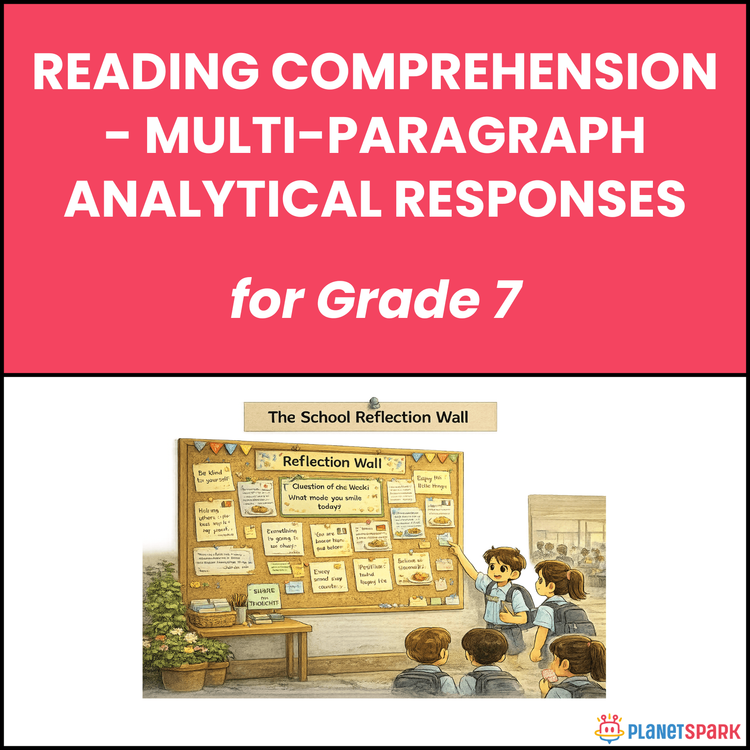
Class 7 Worksheet on Multi Paragraph Responses
Master Multi-Paragraph Analytical Responses: Grade 7 Reading Comprehension Worksheet
This Grade 7 worksheet is designed to help students develop strong reading comprehension skills by analyzing ideas across a full passage and writing thoughtful multi-paragraph responses using evidence from the text. With a variety of engaging exercises, this worksheet provides essential practice for young learners.
In this worksheet, students will focus on understanding deeper ideas, evaluating actions, and supporting responses with textual evidence, with activities such as:
✔️ Multiple choice questions to identify the best analytical answer based on the story.
✔️ Fill-in-the-blank exercises using important words from the passage.
✔️ True/False statements to test understanding of facts and implied meaning.
✔️ Sentence completion to explain ideas using supporting details from the text.
✔️ Paragraph completion to strengthen comprehension and analytical writing skills.
This worksheet helps students understand how to connect ideas, explain themes, and support opinions with evidence, improving comprehension, critical thinking, and structured response writing.
Perfect for strengthening core English reading skills in a fun, structured, and practical way!
🔹 Answer Key (for parents and educators)
Exercise 1 – Choose the Best Answer:
1. c) She wanted students to think positively.
2. a) They thought nobody would stop to read.
3. c) Kind words can change heavy hearts.
4. a) They could reduce the project cost.
5. b) She offered colorful sticky notes.
6. b) Students worked together.
7. a) She liked the practical and meaningful plan.
8. b) Enough wall space and faded charts.
9. a) Small reflections can create positive change.
10. c) It helped students think and respond.
Exercise 2 – Fill in the Blanks:
1. reflection
2. noticed
3. borders
4. wall
5. teacher
6. morning
7. paper
8. positive
9. change
10. notes
Exercise 3 – True or False:
1. False
2. True
3. True
4. False
5. True
6. True
7. False
8. True
9. False
10. False
Exercise 4 – Complete Each Sentence:
1. Sana suggested the Reflection Wall because she wanted students to think positively and share kind thoughts during difficult days.
2. Sana remembered her aunt’s words because she understood that small words and kindness can change heavy hearts.
3. The weekly question helped students think and respond instead of rushing through the day without reflection.
4. Students learned the value of reflection because it helped them pause, understand themselves better, and support others.
5. Some students doubted the idea because they thought nobody would stop to read since everyone was always busy.
6. Imran supported the plan by suggesting one weekly question and using old chart paper to reduce project cost.
7. Mrs Thomas helped by liking the idea and asking them to prepare a simple plan for the Reflection Wall.
8. Neha offered help after she listened carefully and brought colorful sticky notes from home.
9. Old chart paper was useful because it reduced the project cost and reused available materials.
10. Students started using the Reflection Wall when it became a class effort and many students stopped there every morning before class.
Exercise 5 – Complete the Passage:
1. reflection
2. noticed
3. space
4. borders
5. teacher
6. paper
7. morning
8. notes
9. positive
10. change
Help your child strengthen analytical reading skills and build confidence in writing thoughtful evidence-based responses.
Book a free trial!
Frequently Asked Questions
They teach students to organize ideas clearly across paragraphs, improving written responses in Class 7 CBSE English practice.
They help learners explain thoughts fully, connect evidence, and present stronger reasoning instead of giving short incomplete answers.
They can guide children to plan introduction, supporting points, and conclusion before writing answers to reading questions.