
Class 6 English Worksheet on Past Continuous Tense

Class 6 English Worksheet on Past Continuous Tense
Action in Progress: Mastering Past Continuous Tense for Class 6
This Grade 6 English worksheet focuses on the Past Continuous Tense, helping students understand how to describe actions that were happening at a specific time in the past. Designed with engaging and structured activities, this worksheet strengthens grammar skills through practical usage and repetition.
Why Past Continuous Tense Matters in Grammar?
Past continuous tense is essential for expressing ongoing actions in the past. For Grade 6 learners, this topic is important because:
1. It helps describe actions that were happening at a particular moment in the past.
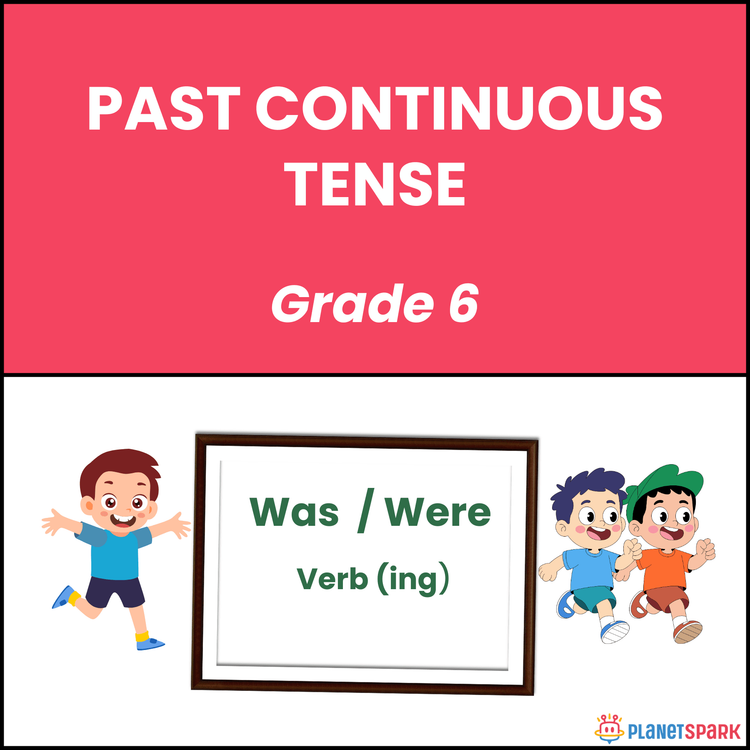
2. It uses “was/were + verb + ing” structure for clarity and correctness.
3. It improves storytelling and descriptive writing skills.
4. It builds a strong foundation for understanding more complex tenses.
What’s Inside This Worksheet?
This worksheet includes five grammar-rich activities that build fluency with past continuous tense:
Exercise 1 – Multiple Choice Questions
Students choose the correct past continuous form from two options. Example: “She was playing cricket” vs “She played cricket.”
Exercise 2 – True or False
Students identify whether the given sentences correctly use past continuous tense, improving error detection skills.
Exercise 3 – Fill in the Blanks
Students complete sentences using correct past continuous forms such as “was walking” or “were talking.”
Exercise 4 – Sentence Rewriting
Students convert simple past sentences into past continuous tense, reinforcing sentence structure.
Exercise 5 – Paragraph Completion
Students read a short passage and fill in blanks with correct past continuous verbs, helping them apply the concept in context.
Answer Key (For Parents & Educators)
Exercise 1 – Multiple Choice Questions
1. She was playing cricket
2. They were singing a song
3. He was eating dinner
4. She was walking to school
5. He was reading a book
6. They were playing soccer
7. She was working in the office
8. They were studying for the test
9. He was talking to his friend
10. She was running in the park
Exercise 2 – True or False
1. True
2. False
3. False
4. True
5. False
6. False
7. False
8. False
9. False
10. False
Exercise 3 – Fill in the Blanks
1. was walking
2. were talking
3. was reading
4. was studying
5. were watching
6. was eating
7. were waiting
8. was cooking
9. were playing
10. was running
Exercise 4 – Sentence Rewriting
1. He was playing cricket
2. He was eating dinner
3. She was walking to school
4. They were singing a song
5. He was reading a book
6. They were playing soccer
7. They were studying for the test
8. He was talking to his friend
9. She was working in the office
10. She was running in the park
Exercise 5 – Paragraph Completion
was waiting
were talking
was trying
was looking
were walking
were laughing
was falling
were talking
was glowing
was moving
Help your child confidently describe ongoing past actions with this engaging grammar worksheet and boost their sentence-building skills today!
Frequently Asked Questions
The past continuous tense is used for actions that were happening at a specific moment in the past.
While is used to describe two actions happening at the same time, and "when" is used for an interruption.
Mastering the past continuous tense helps kids explain ongoing actions in the past clearly.